

Nano Banana 2.1 Review: What Changed From Nano Banana 2 (We Tested It)
We ran Nano Banana 2.1 and Nano Banana 2 through the same prompts and edited one shared image with both. Spelling was a tie; 2.1 kept backgrounds free of invented text and costs about half as much per 1K image.
Nano Banana 2.1 is Google's October 2026 update to Nano Banana 2 (Gemini 3.1 Flash Image), generally available since October 6 under the model ID gemini-nano-banana-2.1. Google's list price for a 1K image is about half of what Nano Banana 2 cost. In our tests the two models tied on spelling: both got six quoted menu strings right in 4 of 4 runs. Where 2.1 pulled ahead was the background, with no invented labels in any run against 3 of 4 runs for Nano Banana 2.
DataCamp's early review ran one image per prompt and had each model edit its own output. We ran our text test four times per model and gave both models the same base image to edit, so the comparison below is like for like.
What's new in Nano Banana 2.1
From Google's Nano Banana 2.1 model page and the Gemini API pricing page, checked on November 6, 2026:
Nano Banana 2.1 | Nano Banana 2 | |
|---|---|---|
Model ID |
|
|
Output sizes | 1K, 2K, 4K (default 1K) | 0.5K, 1K, 2K, 4K |
Thinking levels | minimal, medium, high (default medium) | minimal, high (default minimal) |
Reference images | Up to 14 (4 characters, 10 objects) | Up to 14 |
Image output price, 1K / 2K / 4K | $0.0336 / $0.0504 / $0.113 | $0.067 / $0.101 / $0.151 |
Input tokens, per 1M | $1.50 | $0.50 |
Text and thinking output, per 1M | $7.50 | $3.00 |
Status | Stable | Deprecated, no shutdown date |
The model page also lists two changes that aren't in the table. Google says 2.1 no longer produces tiling artifacts at 1:4, 4:1, 1:8 and 8:1 when rendering at 2K or 4K, and it can ground images in both Google Web Search and Google Image Search. The 512px option is gone, so the cheapest image is now a 1K one.
Google's model card, as quoted by DataCamp, puts 2.1 at 1050 Elo against 990 for Nano Banana 2 on Google's internal preference eval.
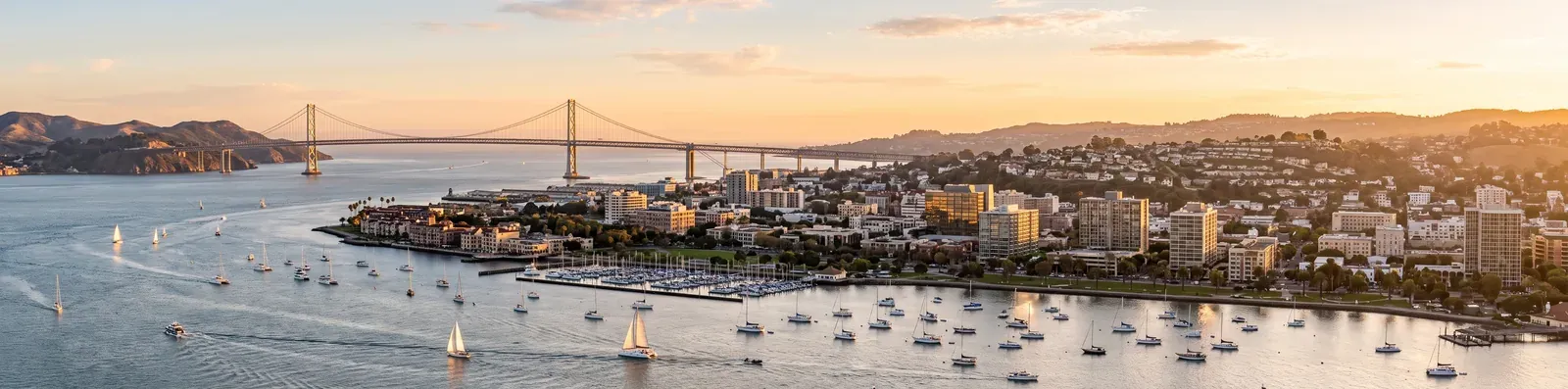
We ran one 4:1 panorama at 2K as a spot check on the wide-format claim:
Panoramic photograph of a coastal city at golden hour. A long suspension bridge spans the full width of the frame, sailboats in the harbor in the foreground, hills with houses behind the city. Consistent lighting and perspective from the left edge to the right edge.
【上传图片 03】images/03-panorama-nb21.webp
alt:
Nano Banana 2.1, 2K, 4:1
We saw no seams or repeated blocks of buildings, and the light stays even across the frame. The bridge only spans the left half, though, so the "full width" instruction was missed. One render with no Nano Banana 2 control doesn't prove the fix, and at least one API provider still advises keeping Nano Banana 2 for panoramas.
Nano Banana 2.1 vs Nano Banana 2: same prompt, four runs each
Google lists text rendering as an improvement, so we tested it with a menu board: six exact strings, four runs per model, 1K, 3:4. We ran every test in this article on MuseSpark, the model platform we build.
Both models ran at their defaults, which differ: 2.1 thinks at medium and Nano Banana 2 at minimal. We left it that way because it's what most people will get, and MuseSpark doesn't expose the thinking setting for these models yet. Some of the difference below may come from thinking level rather than the model itself.
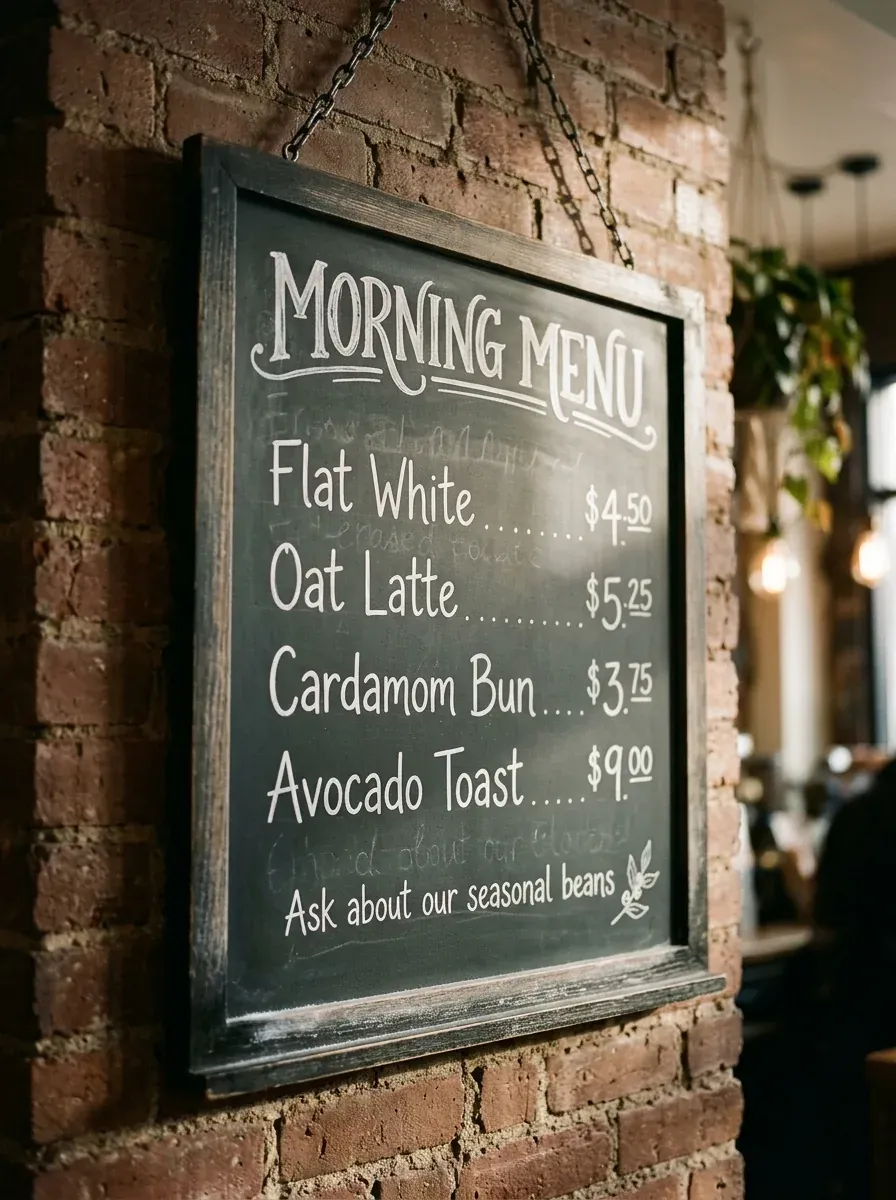
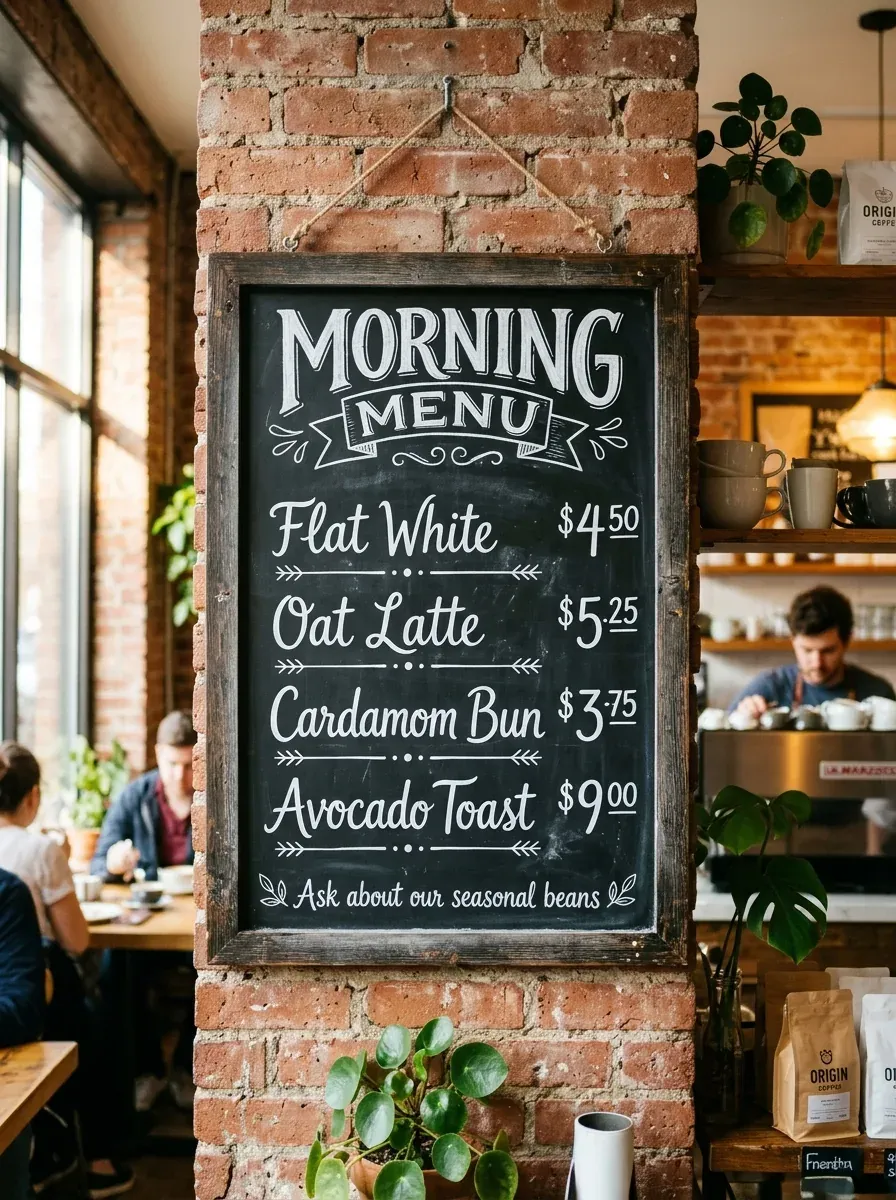
A chalkboard menu board hanging on a brick wall in a small neighborhood coffee shop. Hand-lettered white chalk text. Title at the top: "MORNING MENU". Four items, each with its price aligned on the right: "Flat White $4.50", "Oat Latte $5.25", "Cardamom Bun $3.75", "Avocado Toast $9.00". A small line at the bottom: "Ask about our seasonal beans". Warm morning window light, shallow depth of field, photorealistic.
Nano Banana 2.1, run 1 of 4, 1K, 3:4
Nano Banana 2, run 1 of 4, 1K, 3:4
Across 4 runs each | Nano Banana 2.1 | Nano Banana 2 |
|---|---|---|
All six requested strings spelled correctly | 4 of 4 | 4 of 4 |
Invented brand names or labels in the background | 0 of 4 | 3 of 4 |
Drifted from the prompt's styling | 1 of 4 (cream chalk instead of white) | 1 of 4 (menu turned into all caps) |
Faint "erased chalk" scribbles between lines | 2 of 4 | 0 of 4 |
Six short quoted strings weren't hard enough to separate them. Nano Banana 2 got every one right in every run.
Nano Banana 2 kept adding writing nobody asked for: coffee bags labeled "ORIGIN COFFEE" and "The Daily Bean", a garbled "Fnentha" tag, and in one run a real manufacturer's name on the espresso machine. In ad creative or a product mockup, each of those would need to be painted out. 2.1 left the backgrounds clean in all four runs. Its quirks were the cream chalk in one run and ghosted, half-erased words between menu lines in two.
DataCamp's infographic test found a bigger gap: Nano Banana 2 left the layout unfinished while 2.1 completed it. That was a single run with thinking set to high, and we haven't checked long-form text ourselves.
An r/GeminiAI user who ran 2.1, Nano Banana 2 and Nano Banana Pro on four prompts (one shot each) saw the same habit from the older model: Nano Banana 2 invented a "MEOW" caption and a to-do list in a desk scene, and set a poster in all caps. They also caught 2.1 turning periods in small print into bullet dots and adding a carry loop to a bottle lid that wasn't in the prompt. So proofread punctuation and small props, not just spelling. Their busy-scene result backs up Google's prompt-adherence claim: asked for exactly eight items on a desk, 2.1 placed all eight.
Editing test: one base image, two edits
We generated a base image with 2.1, then gave both models that same image and the same instruction. Because the base came from 2.1, it may have a home advantage here.
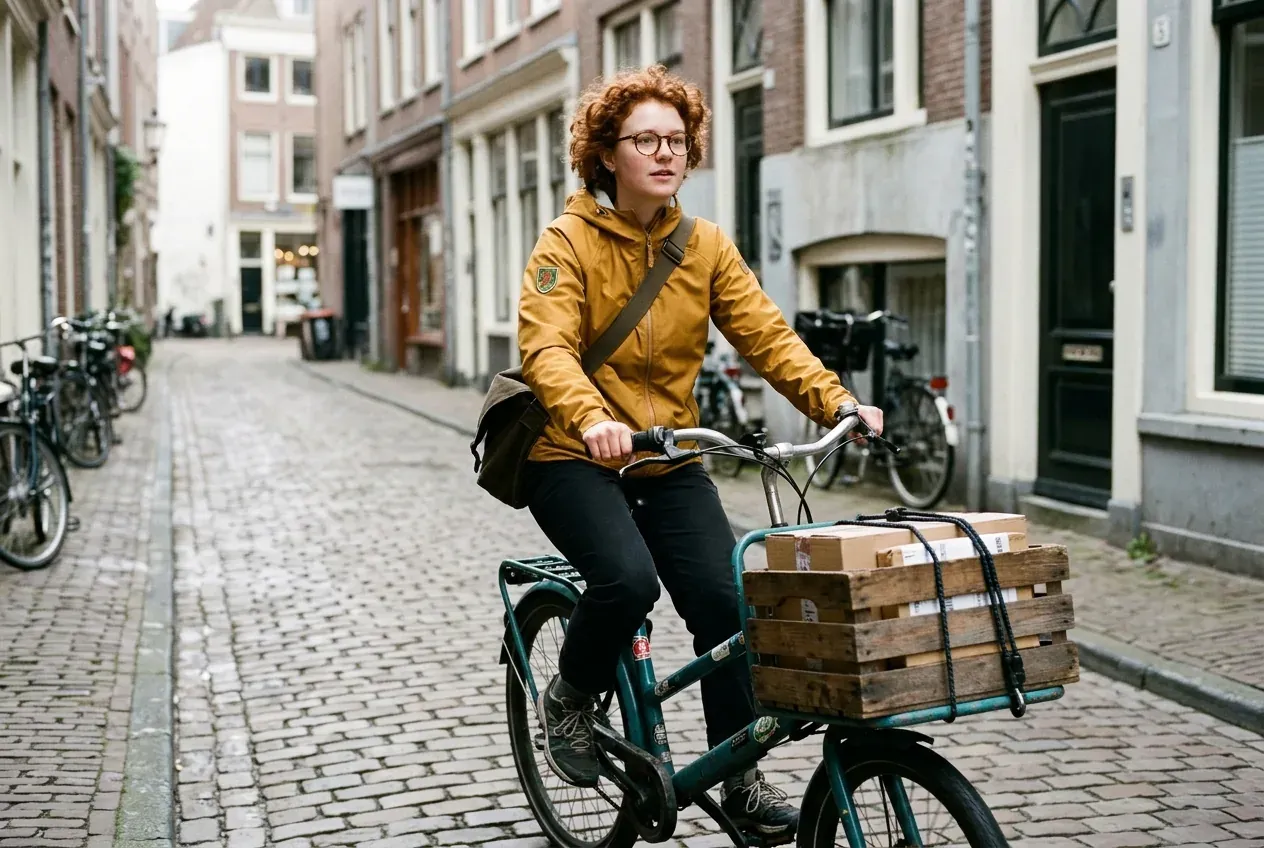
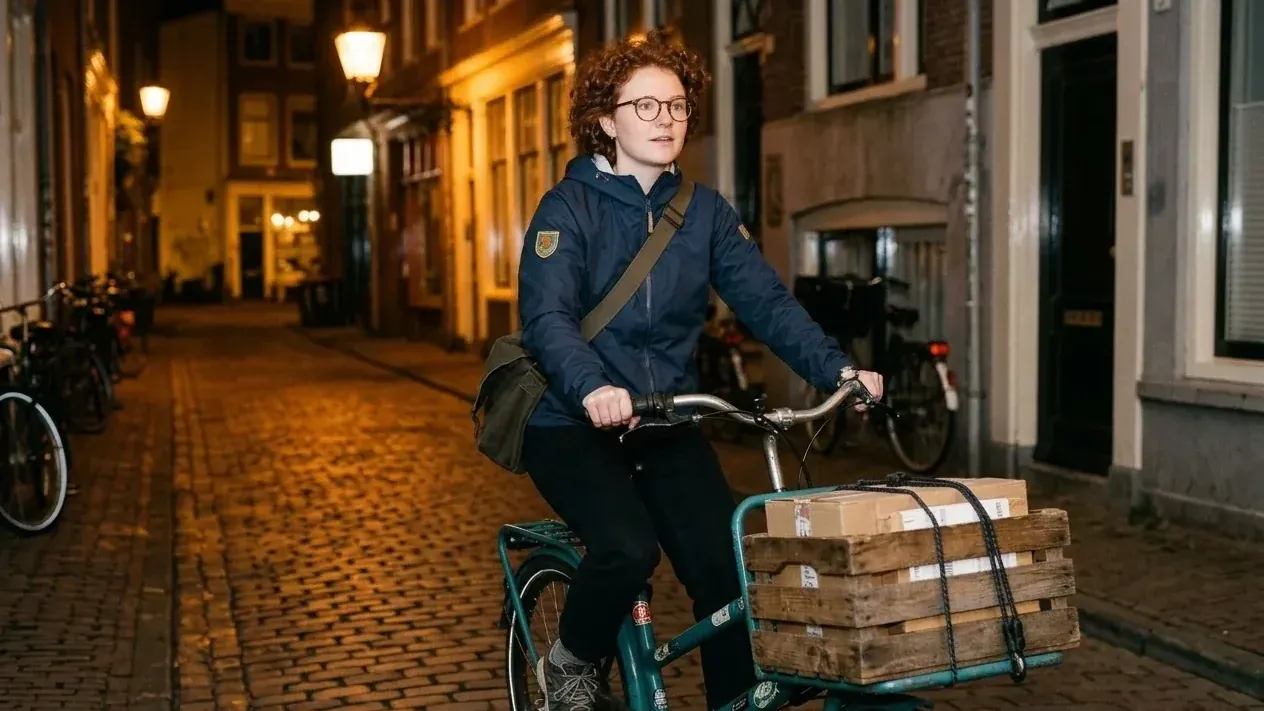
Base image, Nano Banana 2.1, 1K, 3:2
Change her rain jacket to navy blue and change the time to night, lit by warm street lamps. Keep everything else exactly the same: her face, curly red hair, round glasses, the green fox patch on the left sleeve, the teal cargo bicycle with the wooden crate, and the street.
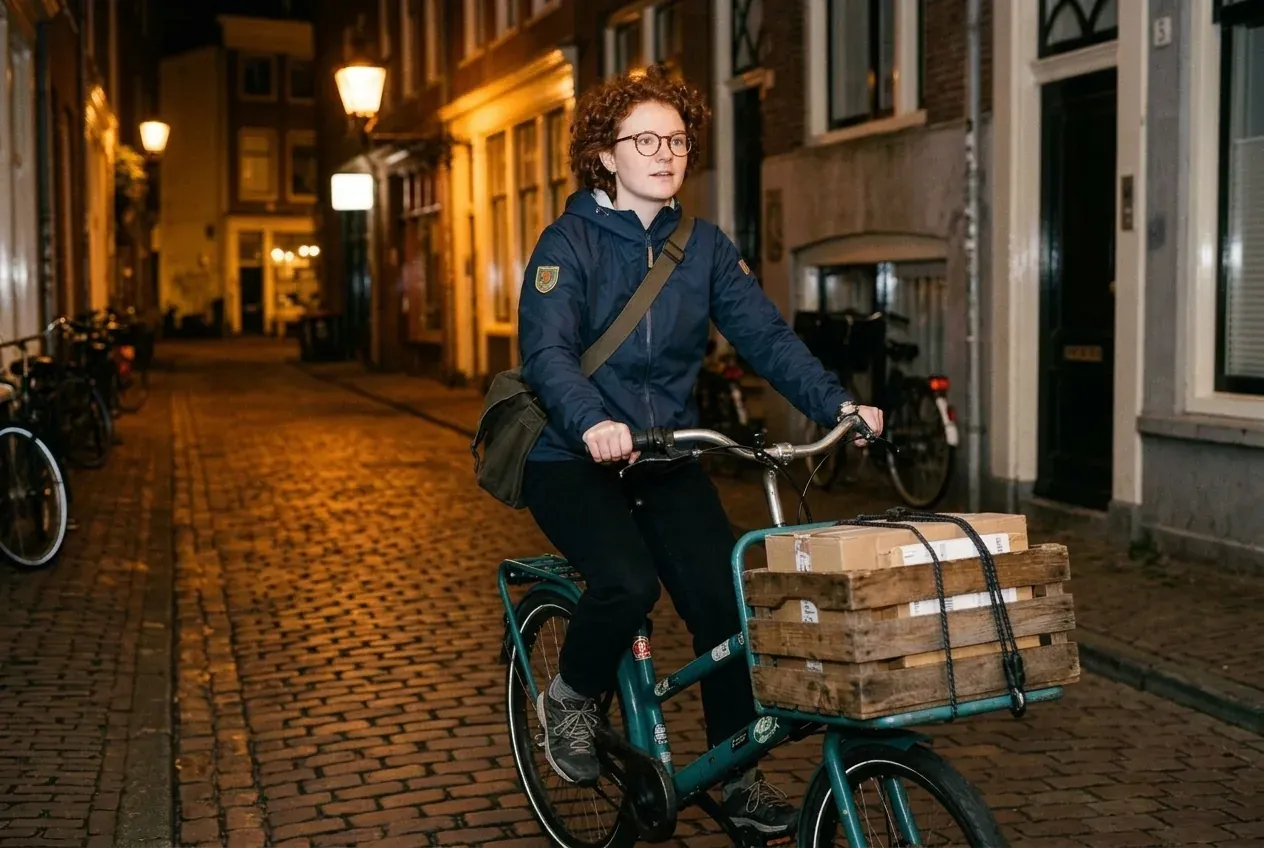
Edit with Nano Banana 2.1
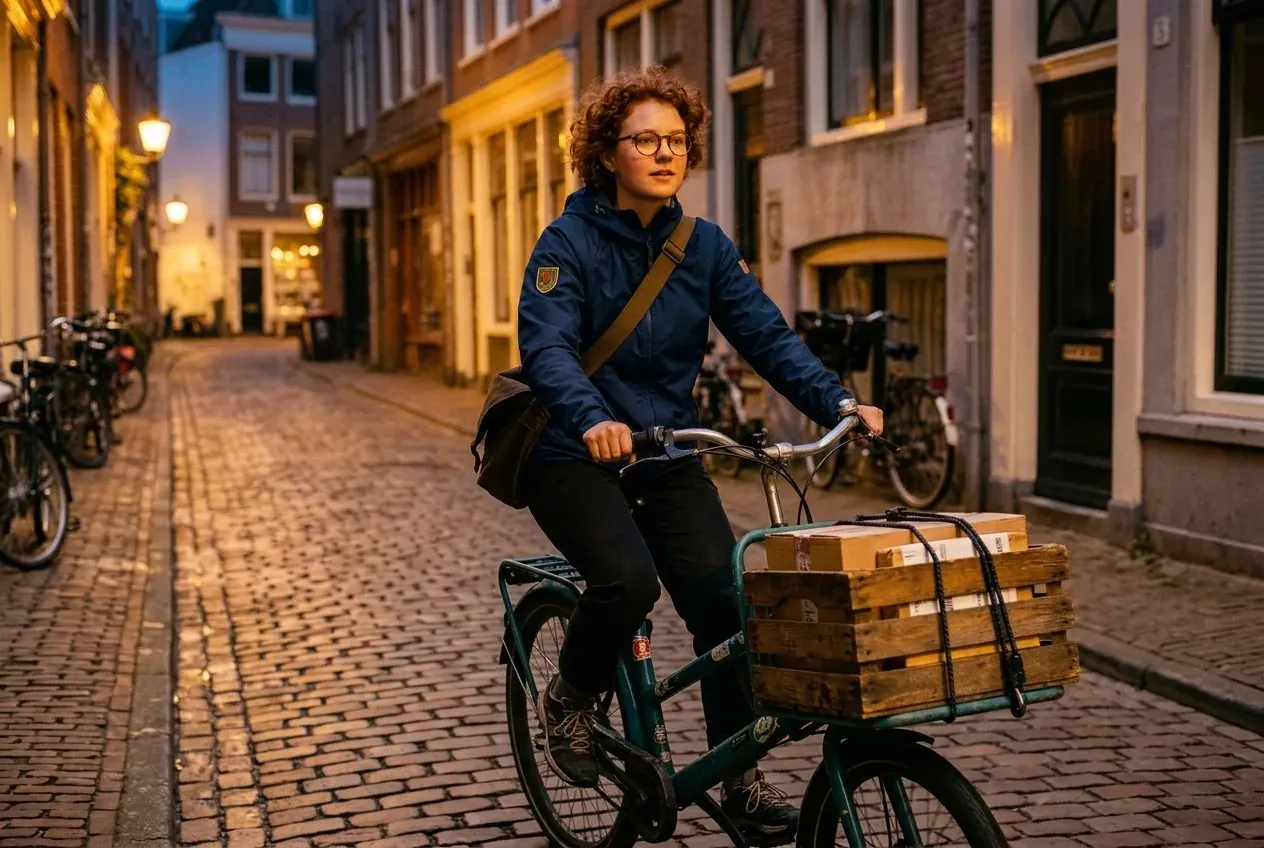
Edit with Nano Banana 2
Both edits kept the pose, face, glasses, messenger bag, cobblestones, the teal cargo bike and the crate of cardboard boxes. The base image had drawn the "fox patch" as a small green shield-shaped badge, and both edits kept that badge where it was.
The difference was in following the instruction. 2.1 made it properly night: dark sky, lamp light on the wet stones. Nano Banana 2 stopped at dusk, with the lamps on and the sky still bright. 2.1's subject looks lit by a camera flash, a little cooler than the warm street, while Nano Banana 2 blends the light on the person better. We'd score this a narrow win for 2.1 on following the prompt and a draw on preservation.
Our first 2.1 attempt came back with a different pose, asphalt instead of cobblestones, and the badge redrawn as an actual fox. Our request had put the photo in the wrong field, the call went through without an error, and the model generated from the text alone. If an edit returns a new composition, check that the image was actually attached.
Is Nano Banana 2.1 actually cheaper?
Per image, yes: about half price at 1K and 2K, and about a quarter off at 4K. Google's list prices for image output, checked on November 6, 2026:
Price per image | 1K | 2K | 4K |
|---|---|---|---|
Nano Banana 2.1 | $0.0336 | $0.0504 | $0.113 |
Nano Banana 2 | $0.067 | $0.101 | $0.151 |
Saving with 2.1 | about 50% | about 50% | about 25% |
These per-image figures cover the image output tokens only. Prompt input and thinking are billed on top, which matters for the two points below. If you run the models on MuseSpark, both are billed per token at rates below Google's list price.
Per thousand 1K images, 2.1 comes to $33.60 at list price. A cost ranking of major image APIs that circulated on X in early November put it first, ahead of MAI-Image-2.6 and Grok Imagine 2.0, which is why it keeps coming up in community threads as the model for volume work.
The higher input price barely matters. At 1K, 2.1 saves $0.0334 per image, and input costs $1.00 more per million tokens, so it would take about 33,000 extra input tokens per image to cancel the saving. A normal prompt is a few hundred.
Thinking is the real unknown. It's billed at $7.50 per million tokens on 2.1 against $3.00 on Nano Banana 2, and 2.1 defaults to medium. Google's image generation docs say the model can draw up to two interim images while it plans. We couldn't see per-request token counts in our runs, so we can't say how much thinking adds. If you call the Gemini API directly with simple prompts, compare a small batch at minimal before a big job.
What Reddit and X users are saying about Nano Banana 2.1
The most-upvoted post praises photorealism. The most specific complaints are about following instructions.
Google's launch post on X drew about 1.2 million views. In r/GeminiAI, "Nano Banana 2.1 goes crazy" had passed 1,200 upvotes by November 6; the poster said they wouldn't have guessed the image was AI.
The complaints are about size and obedience. An r/Bard thread is titled "I feel cheated", and one commenter in the launch thread called the upgrade something "you have to squint to find." In r/GoogleFlow, a user wrote that the model is "completely deaf" to instructions. Our edit test pointed the other way, with 2.1 following the night-time instruction more literally than Nano Banana 2, but we ran one edit, not dozens.
Some threads may also be comparing the wrong models. In one r/GoogleFlow discussion, a commenter believed Flow had relabeled 2.1 as "Nano Banana 2", which would make a "2 vs 2.1" comparison inside Flow meaningless.
How to use Nano Banana 2.1
Where | What to know |
|---|---|
Gemini app | Google's launch announcement lists it. Users in r/GeminiAI report the app now sends image requests to 2.1 by default, with a "Redo with Pro" option that doesn't always appear. Plan access has varied, so check your model menu. |
Google AI Studio and Gemini API | Model ID |
Google Flow and Stitch | Both announced it on launch day; the Stitch team suggests it for UI hero graphics and vector-style logos. A user in r/GoogleFlow spotted it in Flow on October 5, a day before the official release. |
MuseSpark | Pay as you go, billed on tokens used. Compare with the Nano Banana 2 model page and the Nano Banana Pro model page. |
What we'd do based on these runs
Two of these we saw directly in our tests. One comes from how the community writes prompts, and the rest are judgment calls. We mark everything we haven't tested.
- Quote exact text. Every quoted string came out right in all eight menu images. We didn't run an unquoted version for comparison.
- List what must stay fixed in an edit. We named the face, hair, glasses, bike and street, and both models kept them. We didn't try the edit without that list.
- Describe a clean background in positive terms (untested). Rather than only saying "no other text", say what's there: "a plain brick wall with nothing written on it". It targets the stray labels Nano Banana 2 added, and image-prompting guides generally favor positive descriptions over negations.
- Try structured prompts for complex scenes (untested). The most-upvoted 2.1 post on r/GeminiAI used a JSON-structured prompt, and prompt sharers on X routinely pin colors with hex codes such as #D9A17C. When you need exact colors or many specified objects, that structure is worth a try.
- Settle composition at 1K before paying for 4K (untested). At Google's list price a 4K image costs about 3.4 times a 1K one. A fresh 4K run won't reproduce your draft exactly, so feed the chosen draft back in as a reference.
Should you switch from Nano Banana 2?
Switch if you generate at 1K or 2K, which covers most people. You'll pay roughly half per image, and in our runs you'd get fewer invented labels in the background. Google's docs already recommend 2.1 for new projects, and the Gemini API changelog marks Nano Banana 2 as deprecated.
The r/GeminiAI tester mentioned above landed on a split that also shows up in posts on X: 2.1 for busy scenes and high-volume batches, Nano Banana Pro when a client cares about exact copy and punctuation.
Stay for now if you need 512px output, or if a pipeline is tuned to Nano Banana 2's look and you haven't re-tested it. Choosing between 2.1, Nano Banana Pro and Nano Banana 2 Lite is a separate question, which we're covering in its own comparison.
FAQ
Is Nano Banana 2.1 free?
Not through the API. Google's pricing page lists no free tier for gemini-nano-banana-2.1, and image output starts at $0.0336 per 1K image. Access in the consumer Gemini app depends on your plan, so check the model menu in your account.
When was Nano Banana 2.1 released?
October 6, 2026, when Google made it generally available in the Gemini API and AI Studio and announced it for the Gemini app, Flow and Stitch. Users had spotted it in Google Flow the day before.
What is the Nano Banana 2.1 model ID?
gemini-nano-banana-2.1. Per Google's pricing page, Nano Banana 2 is gemini-3.1-flash-image and Nano Banana Pro is gemini-3-pro-image. "Nano Banana 2" is the product name for Gemini 3.1 Flash Image, while 2.1 got a Nano Banana model ID of its own.
Is Nano Banana 2 being shut down?
It's deprecated, and Google's changelog says no shutdown date has been announced (as of November 6, 2026). A few news aggregators reported October 29, 2026; we couldn't find that date on any Google page.
To run these prompts yourself, Nano Banana 2.1 is on MuseSpark alongside Nano Banana 2 and Pro, with no subscription required.
Sources
- Google AI for Developers: Gemini Nano Banana 2.1 model page
- Google AI for Developers: Gemini API pricing
- Google AI for Developers: Image generation with Gemini
- Google AI for Developers: Gemini API changelog
- Google on X: Nano Banana 2.1 launch announcement
- DataCamp: Nano Banana 2.1: Features, Pricing, and Hands-On Tests
- Reddit, r/GeminiAI: Nano Banana 2.1 goes crazy
- Reddit, r/Bard: I feel cheated
- Reddit, r/GoogleFlow: Nano Banana 2.1 is completely deaf
- Reddit, r/GoogleFlow: Nano Banana 2.1 just appeared
- Reddit, r/GeminiAI: Nano Banana 2.1 vs Nano Banana 2 vs Nano Banana Pro on the same four prompts
- Nano Banana on X: Nano Banana 2.1 launch post
- Flow by Google on X: Nano Banana 2.1 in Google Flow
- Stitch by Google on X: Nano Banana 2.1 in Stitch
- X: Image API cost ranking per 1,000 images
- X: Example Nano Banana 2.1 prompt with hex color codes