99.9% SLA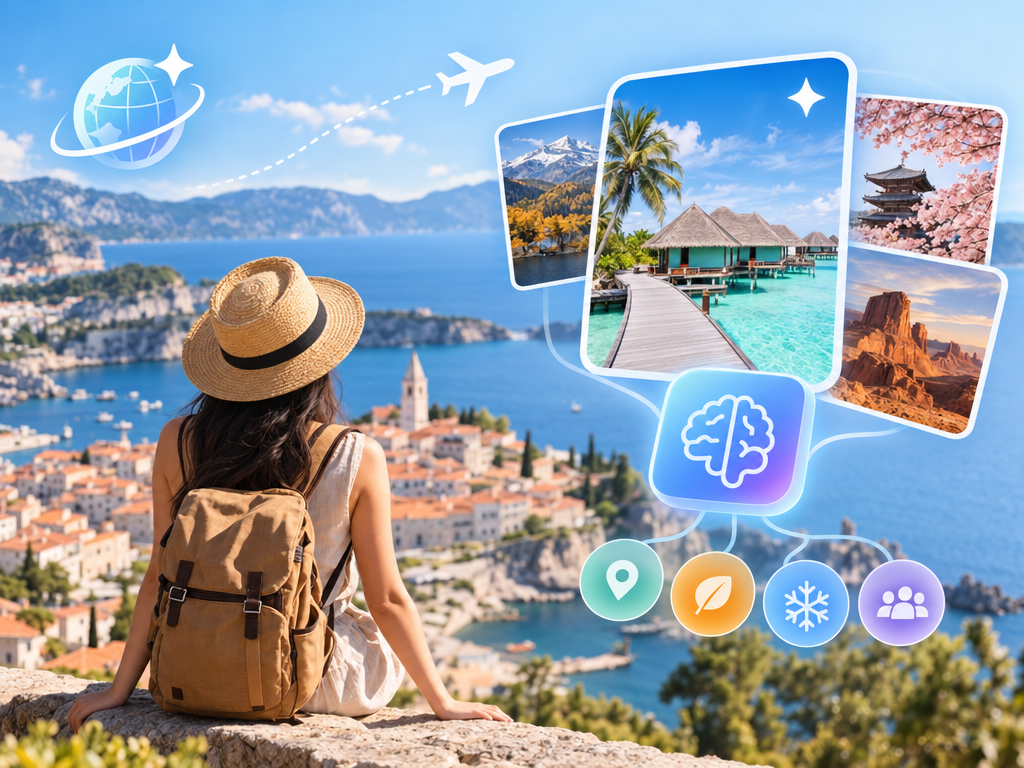
AI Travel Trends: Travel Content AI Review & Practical Guide
AI Travel Trends generates travel-focused imagery and content aligned with current travel trends. It turns destination ideas, seasonal angles, and niche travel themes into visual content - the kind brands, agencies, and creators need for campaigns that track what travelers actually want.
Travel marketing runs on imagery, and travel imagery runs on trends: quiet luxury, slow travel, hidden gems, remote work escapes. Keeping up with those shifts is a research and production problem at once. This tool compresses the production side, letting you visualize a trend angle in minutes.
Quick Facts
| Attribute | Value |
|---|---|
| Tool name | AI Travel Trends |
| Tool ID | ai-travel-trends |
| Category | AI image generation / travel marketing |
| Primary task | Generate travel trend imagery and content |
| Input | Destination or trend concept |
| Output | Travel-themed imagery/content |
| API | REST inference, no cold starts |
| Best for | Travel brands, agencies, creators, destination marketing |
Table of Contents
- First Impressions
- Core Features
- What to Watch For
- Core Advantages
- Best Use Cases
- Who Should Use It
- FAQ
1. First Impressions
The output has the visual language of modern travel content - aspirational scenes, authentic-feeling moments, and the kind of composition that works in feeds and campaign creative. It is clearly aimed at marketing use rather than technical illustration.
The most useful workflow is concepting: testing a trend angle, a season, or a destination aesthetic before committing to a shoot or a campaign. It makes the "what should this look like" conversation instant.
2. Core Features
- Travel-focused generation: imagery tuned for destinations, seasons, and travel lifestyles.
- Trend-oriented content: concepts can be steered toward current travel themes.
- Campaign-ready visuals: composition suited to marketing, social, and editorial use.
- Fast concepting: explore destination aesthetics without location shoots.
- REST inference API: no cold starts for content pipelines.
3. What to Watch For
- Authenticity matters in travel: heavily idealized output can feel stock-photo-generic; push for specific, lived-in details.
- Real destinations need accuracy: landmark rendering may not be exact - verify against reality for official use.
- Trends change fast: the model reflects prompt direction; feed it current trend language for current results.
- Legal review for campaign use: rights and disclosure rules apply to AI-generated travel imagery like any other.
4. Core Advantages
- Concepting speed: visualize a destination or trend angle in minutes.
- Campaign volume: generate variant imagery for feeds, banners, and decks.
- No location dependency: test creative before the shoot, not after.
- Trend alignment: prompt-driven control keeps output on brief.
5. Best Use Cases
- Destination marketing campaigns and seasonal creative.
- Travel brand social content and ad variants.
- Editorial and blog imagery for travel trends.
- Pitch decks and mood boards for tourism boards and agencies.
6. Who Should Use It
Pick it up if you market travel, run destination content, or build creative for travel brands and need fast, on-trend visual concepts.
Skip it if you need geographically exact representations of specific landmarks or real properties - verify and supplement with real photography.