99.9% SLA
Vidu Q3: Native Audio-Video Generation for Drama and Narrative - Full Review
Vidu Q3 (this catalog entry: vidu-q3-video) is Shengshu AI's next-generation video model, built for narrative work: 16-second single-pass generation with native audio - dialogue, narration, sound effects, and music generated together with the visuals - plus multi-character dialogue and frame-level camera/beat control.
Here's the short version: Vidu Q3 is the "short drama in a box" model. The 16-second single generation is the longest in its class (vs 10-12 seconds for most competitors), the four-track audio output means a publishable clip in one export, and the multi-language support (English, Japanese, Chinese) plus multi-character dialogue maps directly to manga, anime, and short-drama production. The honest caveats: output resolution tops out around 720p-1080p depending on route (1080p-sr is super-resolved from 720p on some paths), the platform's API documentation is thinner than Sora 2's, and "drama-grade" quality still needs your own character-consistency testing across generations.
This guide covers model overview, core features, technical specifications, capability comparison, core advantages, recommended use cases, example prompts, selection recommendations, workflow, and my verdict.
Quick Facts
| Attribute | Value |
|---|---|
| Catalog slug | vidu-q3-video |
| Developer | Shengshu AI (Vidu) |
| Family | Vidu Q3 / Q3 Turbo / Q3-Mix |
| Max single clip | 16 seconds |
| Native audio | Yes - dialogue, narration, SFX, music |
| Languages | English, Japanese, Chinese |
| Multi-character dialogue | Yes |
| Camera control | Frame-level timing and rhythm control |
| Modes | Text-to-video, image-to-video, reference-to-video, start-end-to-video |
| Access | vidu.cn, platform.vidu.cn API |
| Self-hosting | No |
Table of Contents
- Model Overview
- Core Features
- Technical Specifications
- Capability Comparison
- Core Advantages
- Recommended Use Cases
- Example Prompts
- Selection Recommendations
- Workflow: One Export, Publish-Ready
- The Bottom Line
- FAQ
- Sources & Further Reading
1. Model Overview
Vidu Q3 is Shengshu AI's flagship narrative video model. The official positioning is unambiguous: "Born for drama" - built for drama. The release focuses on what short-form narrative production actually needs: long enough clips for a real scene, synchronized audio in one pass, multi-character dialogue, and precise timing control.
The 16-second single-pass generation is the headline - it is longer than the standard 8-12 second clips of competitors, reducing the stitching tax that breaks rhythm in AI video. Native audio covers four track types (dialogue, narration, sound effects, music) that land synchronized with the visuals, so the export is publishable without a separate audio pass.
The model family includes Q3 (balanced), Q3 Turbo (fast), and Q3-Mix (reference-based), giving teams a speed/quality split on the same generation core. API access runs through platform.vidu.cn with standard REST semantics.
2. Core Features
16-second single-pass generation. The longest standard clip in the category - complete scenes in one generation, no stitching.
Native audio, four track types. Dialogue, narration, sound effects, and music are generated synchronized with the visuals in a single export.
Multi-character dialogue. Natural multi-speaker conversation within one clip - the requirement for drama scenes.
Frame-level camera and rhythm control. Precise direction of camera moves and narrative beats, timed to key moments, accents, and emotional beats.
Multi-language output. English, Japanese, and Chinese video output - built for anime, manga-style, and cross-market content.
Multiple generation modes. Text-to-video, image-to-video, reference-to-video (Q3-Mix), and start-end-to-video (first frame + last frame + prompt).
Speed tier. Q3 Turbo for fast iteration when time beats peak quality.
3. Technical Specifications
| Specification | Detail |
|---|---|
| Model | Vidu Q3 |
| Max clip | 16 seconds |
| Native audio | Dialogue, narration, SFX, music |
| Languages | EN, JA, ZH |
| Resolution | 720p standard; 1080p-sr (super-resolved) on some routes |
| Modes | T2V, I2V, reference-to-video, start-end-to-video |
| Variants | Q3 (balanced), Q3 Turbo (fast), Q3-Mix (reference) |
| API | platform.vidu.cn REST |
| Self-hosting | No |
Note: Resolution varies by route: some 1080p outputs are native, while 1080p-sr generates a native 720p source then applies FlashVSR super-resolution. Check the specific endpoint docs before promising clients a resolution.
4. Capability Comparison
| Capability | Vidu Q3 | Seedance 1.5 Pro | HappyHorse 1.0 | Sora 2 |
|---|---|---|---|---|
| Max single clip | 16 s | ~10 s class | 15 s | 12 s |
| Native audio | Yes (4 track types) | Yes | Yes | Not a headline |
| Multi-character dialogue | Yes | Weaker (admitted) | Yes | No |
| Languages | EN/JA/ZH | Multi + dialects | ZH-first | Prompt-driven |
| Camera/beat control | Frame-level | Autonomous scheduling | Cinematic | Limited |
| Multi-shot in one clip | Partial | Yes | Yes | No |
| API docs | Medium | Medium | Beta | Best |
Where Vidu Q3 wins: single-clip length (16 s) and the four-track audio export.
Where it trails: Seedance's dialect lip sync and multi-shot narrative, HappyHorse's subject editing, Sora 2's API contract.
5. Core Advantages
- 16 seconds in one pass. Fewer joins, better rhythm - the practical edge for narrative work.
- Publishable in one export. Dialogue, narration, SFX, and music arrive with the visuals.
- Multi-character dialogue. Natural conversations within a clip - the hard requirement for drama.
- Frame-level direction. Camera and beat control for timed narrative nodes.
- Bilingual-plus market fit. English, Japanese, and Chinese support for anime/manga-style content.
- Speed tier. Q3 Turbo decouples iteration from finals.
- Reference workflows. Q3-Mix and start-end modes give creators structural control.
6. Recommended Use Cases
- Short dramas: 16-second scene beats with dialogue and sound in one generation.
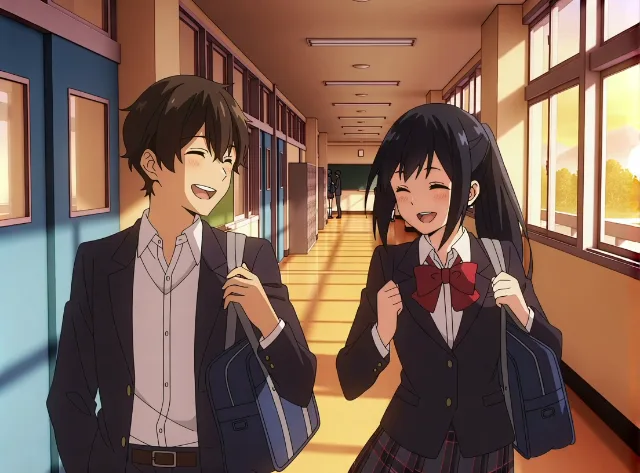
- Manga and anime-style content: Japanese/Chinese output with multi-character conversation.
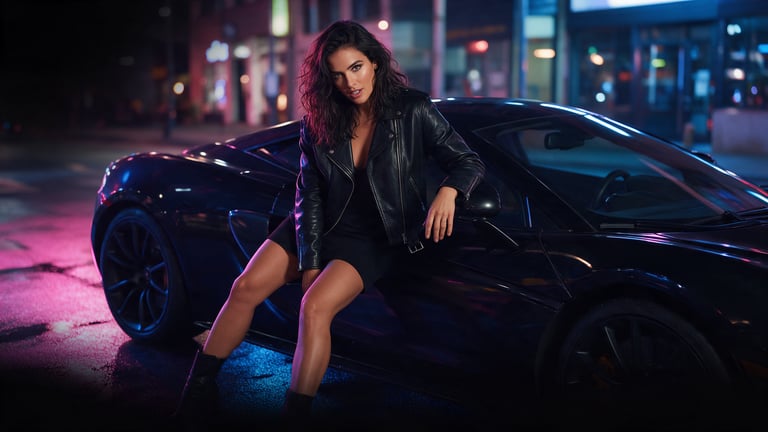
- Narrative advertising: timed camera moves and voiceover in a single export.
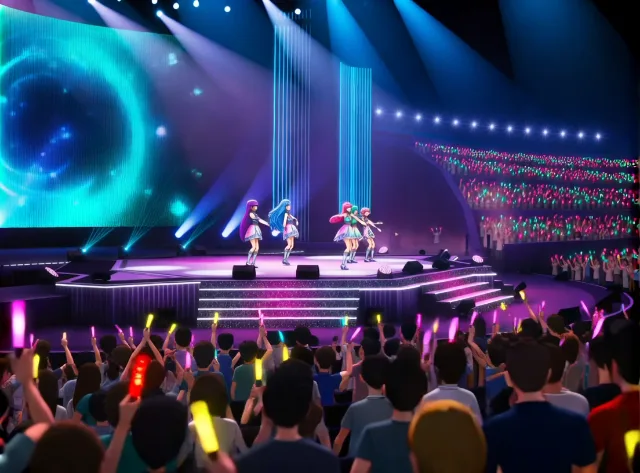
- Music visualizers and lyric videos: beat-level timing control.
- Localized campaigns: English, Japanese, and Chinese versions from one workflow.
- Fast concept iteration: Q3 Turbo for direction exploration before Q3 finals.
7. Example Prompts
1. Text-to-video with dialogue
2. Image-to-video
3. Start-end-to-video
Prompting guidance:
- Write dialogue with speaker tags and language; the model handles multi-character turns.
- Describe timing explicitly ("slow push-in during the second line") - frame-level control responds to it.
- Name the audio tracks you want ("ambient rain, distant traffic, soft piano") - four-track output follows prompt structure.
8. Selection Recommendations
Choose Vidu Q3 if:
- 16-second single clips with native audio are your format.
- Multi-character dialogue and frame-level timing matter for drama/anime work.
- You want English, Japanese, and Chinese output in one model.
- A publish-ready export without a separate audio pass saves you real time.
Choose Seedance 1.5 Pro if:
- Dialect authenticity (Sichuanese/Cantonese) or autonomous camera scheduling matters more.
- You are in the ByteDance ecosystem (Dreamina, Volcano Engine).
Choose HappyHorse 1.0 (once GA) if:
- Subject insertion/editing (S2V/SV2V) is core to your workflow.
Choose Sora 2 if:
- You need the strongest documented API contract and longer assembled sequences.
9. Workflow: One Export, Publish-Ready
Practical notes:
- Use Q3 Turbo for direction exploration, Q3 for finals - the cost split pays for itself.
- Check the resolution route on your endpoint; 1080p-sr means a super-resolution pass.
- Keep character reference images consistent for multi-generation sequences.
10. The Bottom Line
Verdict: Buy for narrative short-form - the drama-first pick. Vidu Q3's 16-second single pass with four-track native audio is exactly what AI short-drama production needs: long enough for a scene, publishable in one export, with multi-character dialogue and frame-level timing. It is not the dialect specialist (Seedance), the editing suite (HappyHorse), or the API contract (Sora 2), but for manga, anime, and drama-style content across English, Japanese, and Chinese, it is the most complete single-clip option. Benchmark character consistency before campaign scale - but this is the model to benchmark first.
Sources & Further Reading
- Vidu Q3 official page - vidu.cn
- Vidu platform update log - platform.vidu.cn
- Vidu Q3 Turbo model - Replicate (hosting partner)
- Vidu Q3-Mix developer guide - AI API Playbook
Specs reflect Vidu's official platform and product pages as of August 2026. Resolution routes and rate limits vary by endpoint; verify against the live API docs.